
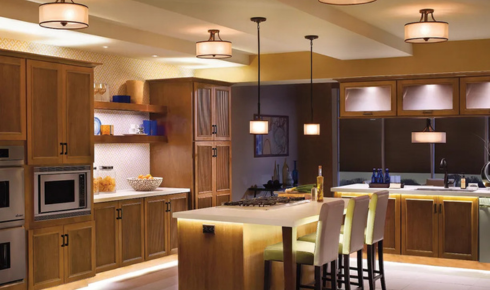
Instead of thinking in exact numbers of watts or lumens, think in layers of light. A comfortable living room usually needs at least three types: general, task and mood lighting. Relying on just one bright tube light in the centre makes the room feel flat and harsh.
General lighting is your main overhead source – a ceiling light, recessed lights or a modest chandelier. This handles basic visibility for cleaning, kids playing, or family time. Then you add task lights where people actually do things: a floor lamp near the sofa for reading, a small table lamp on a side table, maybe a focused light near a desk or TV unit.
Finally, mood lighting gives the room warmth in the evenings. This can be dimmable lamps, wall sconces, or even LED strips subtly hidden behind shelves. These don’t need to be very bright; they just soften the space.
A good test is this: at night, can you sit in the living room with the main light off and still see comfortably using only smaller lights? If yes, you’ve got enough layers. If not, you probably need one or two additional lamps to make the room feel cosy instead of clinical.