Insulated PEX tubing typically costs anywhere from a few dollars per foot to significantly more for premium pre-insulated options, depending on the pipe size, insulation quality, and intended application. Understanding the factors that influence insulated PEX tubing pricing can help you make a well-informed decision before starting your next heating project.
Understanding Insulated PEX Tubing
Insulated PEX tubing is a flexible cross-linked polyethylene pipe that comes surrounded by insulation to reduce heat loss while transporting hot water. It is commonly used in hydronic heating systems, radiant floor heating, and underground piping that connects an outdoor wood boiler system to a home or other building.
Because the insulation helps maintain water temperature over long distances, insulated PEX tubing can improve system efficiency and reduce energy waste.
Average Cost of Insulated PEX Tubing
The price of insulated PEX tubing varies depending on several factors, but here are some general ranges.
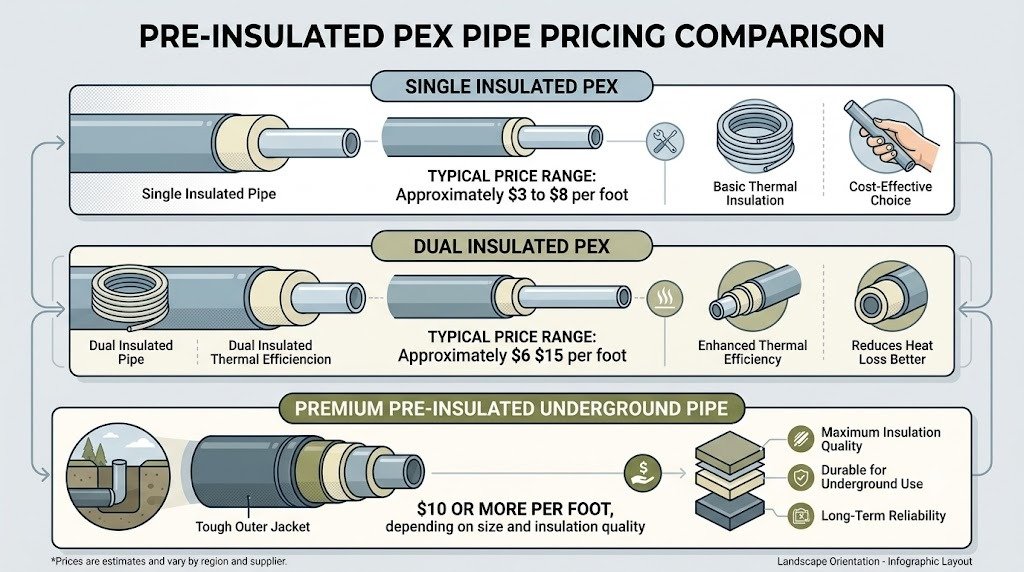
These figures are general estimates and may change based on manufacturer, material costs, shipping, and regional availability.
What Affects the Cost?
Several factors influence how much insulated PEX tubing costs.
Pipe Diameter
Larger diameter tubing requires more material and insulation, which naturally increases the overall price.
Insulation Thickness
Higher quality insulation provides better heat retention but usually comes at a higher cost. Thicker insulation is especially valuable for long underground runs where minimizing heat loss is important.
Number of Carrier Pipes
Some insulated PEX products contain one carrier pipe while others include two or more. Dual pipe systems are common for supply and return water lines in hydronic heating applications and generally cost more.
Jacket Material
The outer protective jacket shields the insulation from moisture, soil movement, and physical damage. More durable jackets may increase the initial investment but can improve long-term reliability.
Manufacturing Quality
Not all insulated PEX tubing is manufactured to the same standards. High-quality products often feature better insulation density, stronger jackets, and improved flexibility, which can justify a higher purchase price.
Is More Expensive Always Better?
Not necessarily. The lowest-priced option may save money upfront, but poor insulation can result in greater heat loss over time. On the other hand, paying for premium features that are unnecessary for your specific installation may not provide additional value.
The best choice depends on your climate, installation distance, heating demands, and overall project goals.
Installation Costs
Besides the tubing itself, installation expenses may include:
- Excavation for underground installation
- Fittings and connectors
- Manifolds
- Heat-shrink sleeves or waterproof sealing materials
- Labor if hiring a professional installer
These additional costs should be included when estimating the total project budget.
How to Save Money Without Sacrificing Quality
If you are planning a new heating system, consider these practical tips.
- Measure the required pipe length carefully before ordering.
- Purchase the correct pipe diameter for your heating system.
- Compare insulation specifications rather than price alone.
- Minimize unnecessary pipe runs whenever possible.
- Plan the installation carefully to reduce labor costs.
Making informed decisions during the planning stage can help reduce overall expenses while maintaining long-term efficiency.
Why Proper Insulation Matters
The primary purpose of insulated PEX tubing is to minimize heat loss as hot water travels between buildings or heating equipment. Better insulation can help improve overall heating efficiency and reduce operating costs over the life of the system.
The United States Department of Energy notes that properly insulated hot water distribution systems can improve energy efficiency by reducing unnecessary heat loss.
Frequently Asked Questions
How much does insulated PEX tubing cost per foot?
Pricing generally ranges from about $3 to over $15 per foot, depending on pipe size, insulation quality, and whether the tubing includes one or multiple carrier pipes.
Is insulated PEX tubing worth the extra cost?
In many heating applications, yes. Proper insulation helps reduce heat loss, which can improve energy efficiency and potentially lower long-term operating costs.
How long does insulated PEX tubing last?
Quality PEX tubing can last several decades when installed correctly and protected from environmental damage. Actual lifespan depends on operating conditions and installation quality.
Can insulated PEX tubing be installed underground?
Yes. Many insulated PEX products are specifically designed for underground installations connecting outdoor boilers to homes, garages, workshops, or other buildings.
Can I install insulated PEX tubing myself?
Some experienced homeowners install insulated PEX tubing on their own. However, larger or more complex heating systems may benefit from professional installation to ensure proper performance and compliance with local building codes.
Conclusion
Understanding the factors that affect insulated PEX tubing cost makes it much easier to plan a heating project with confidence. While prices vary based on size, insulation quality, and application, investing in the right product can improve energy efficiency and long-term system performance.
If you have questions about underground piping or want additional information, feel free to contact us. We are always happy to share helpful information so you can make an informed decision for your heating project.